Caring for Caregivers: Addressing Japan’s JPY 9.2 Trillion Social Challenge
- Social Issues & Advancing Society
In Japan, the number of working caregivers—i.e. people who provide care to family members while continuing to work—is projected to reach approximately 3.18 million by 2030. According to estimates by the Ministry of Economy, Trade and Industry, if current trends continue, the economic repercussions of caregiving-related resignations and reduced productivity are expected to surpass 9 trillion yen.*1 For employees in their prime working years especially, balancing work and caregiving is not just an individual issue. It affects the whole of society, with a direct impact on companies and sustainable economic growth.
In response to this challenge, NTT DATA Life Design Corporation, a newly established company within the NTT DATA Group Corporation, announced in October 2025 the launch of their working caregiver support service: Care La Care. We spoke with Masafumi Hamaguchi, President of the new company, and Masaru Kusutani, Executive Officer at Tokio Marine & Nichido Fire (TMNF), to understand the issue of working caregivers in greater depth and how the new service is providing much-needed relief.
Employee resignations are the tip of the iceberg
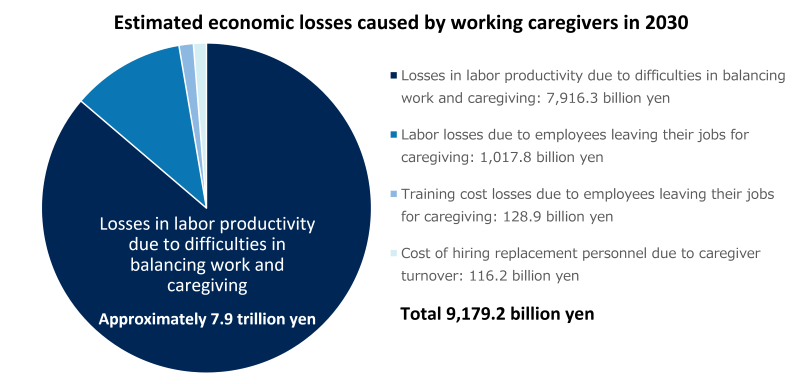
The Ministry of Economy, Trade and Industry estimates that economic losses caused by working caregivers will reach 9.2 trillion yen in 2030. The breakdown of these losses, however, is often overlooked.
“Many business leaders see the risk as employees leaving their jobs, but that only makes up 1 trillion of the 9.2 trillion number,” says Mr. Hamaguchi. “The real issue is the decline in performance among people who continue to come to work while struggling at home. The issue of presenteeism is estimated to result in approx. 7.9 trillion yen in productivity losses.”
-
*Source: Outline of the First Study Group on Supporting Work–Caregiving Balance in Corporate Management (Ministry of Economy, Trade and Industry, November 6, 2023)
Most working caregivers are in their 40s and 50s; well established within their organizations. For fear of feeling like a burden to their colleagues, they often find themselves unable to speak up about their caregiving responsibilities. An internal survey conducted within NTT Group found that the number of working caregivers could constitute up to 10% of all employees.
“We can no longer calculate the costs of caregiving by looking exclusively at employee benefits,” said Mr. Kusutani. “We need to support working caregivers as an investment in our people, creating an environment where core talent can keep working with peace of mind. Doing so will both improve psychological safety and enhance corporate value.”
Better care for the carers
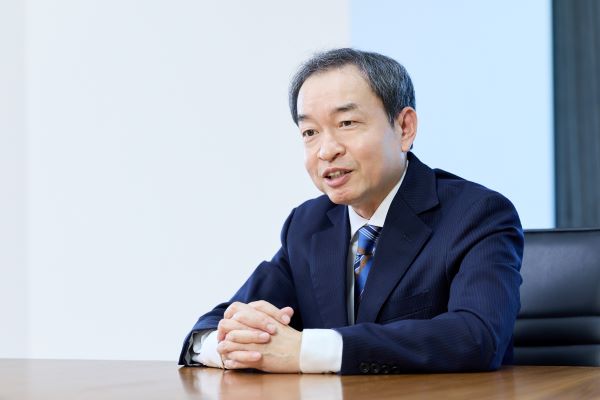
To address the problem, NTT DATA Group Corporation created the NTT DATA Life Design Corporation, which in 2025 launched a service called Care La Care (ケアラケア). Its purpose is to connect companies with caregiving services in local communities in order to deliver appropriate support to working caregivers.
“Large-scale social implementation cannot be achieved by a simple company,” explained Mr. Hamaguchi. “We established this company to build an ecosystem in which diverse stakeholders can easily take part.”
Part of this ecosystem is Tokio Marine & Nichido Fire (TMNF), who saw the new initiative as an earnest effort to tackle a serious social challenge. They entered into a business and capital alliance with NTT DATA Group Corporation: a signal of strong commitment.
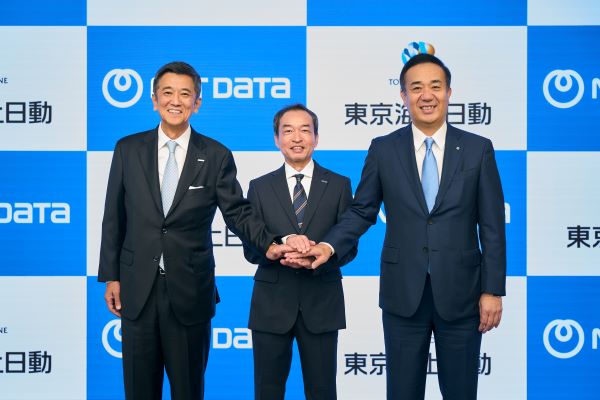
Press conference on the establishment of the new company and the capital and business alliance
In October 2025, in connection with the establishment of NTT DATA Life Design Corporation, a press conference was held by NTT DATA Group Corporation, NTT DATA Life Design Corporation, and Tokio Marine & Nichido Fire Insurance Co., Ltd. Masanori Suzuki, President of NTT DATA Group Corporation; Masafumi Hamaguchi; and Hiroaki Shirota, President of Tokio Marine & Nichido Fire Insurance Co., Ltd., took the stage to explain the background of the capital and business alliance and the business strategy of the new company. They also announced a plan to acquire 300,000 individual members and 500 corporate clients by fiscal 2030, aiming for revenue of 10 billion yen.
End-to-end support for caregivers
Care La Care is unique in that it offers an integrated, personalized service that accompanies employees from their earliest caregiving decisions.
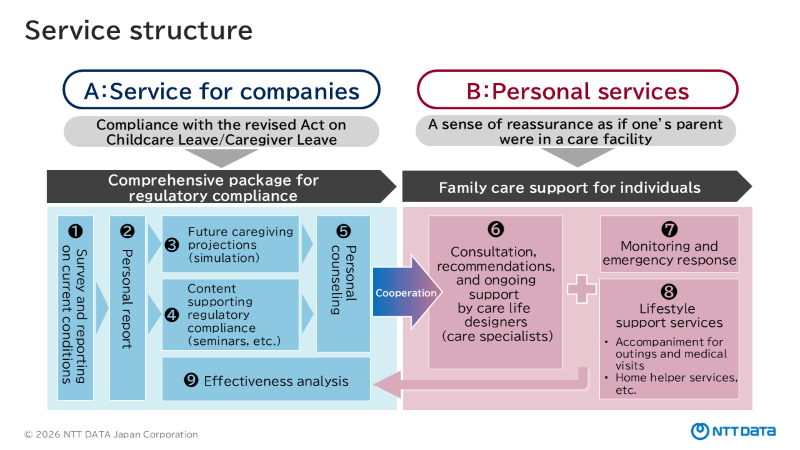
For example, if a working caregiver has an aging parent who has not yet reached the level of need to be certified for long-term care, the support they receive through public services may be limited. Instead, they have to find a provider on their own, which can be challenging. Care La Care can identify such employees and connect them with specialists who design solutions to reduce the burden of care. The program has established an ecosystem of specialists in services such as monitoring, household chores, and accompanying dependents to medical appointments. Care La Care is even planning to integrate the data obtained through these services into a platform able to detect early signs of dementia and optimize care recommendations.
TMNF, meanwhile, contributes not only through capital allocation, but also by sharing know-how. Its group company, Tokio Marine & Nichido Better Life Service, has already accumulated years of experience in both facility and home-based care. They offer Care La Care support for caregiving concerns that cannot be fully understood or solved through data.
From an insurance standpoint, TMNF supports Care La Care by helping integrate coverage into its support frameworks. Caregiving can lead to significant expenses, which TMNF can help alleviate by offering group insurance systems with benefits for people whose parents require long-term care, as well as income protection insurance for employees forced to take extended leave.
From Client Zero to 300,000 working carers
Based on their “Client Zero” approach, NTT Group became their own first test case, rolling out Care La Care across ten of its group companies. They began with a survey, and discovered far more working caregivers than they expected, alongside urgent concerns.
“We received many comments, not only from those affected, but also from younger employees in their 20s, expressing their gratitude for the survey,” Mr. Hamaguchi recalled. “They felt like they couldn’t voice their concerns out of consideration for their colleagues, but deep down they wanted company support.”
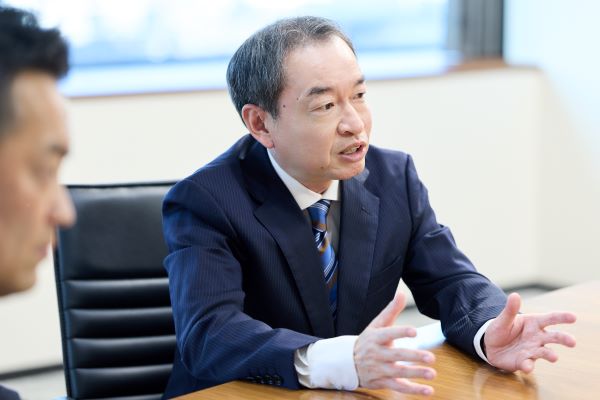
From there, the program is primarily spreading through proposals targeting large enterprises with over 2,000 employees. In such organizations, a more bottom-up approach would be operationally difficult. “We have heard from business leaders the need for urgent solutions,” said Mr. Kusutani. “They are facing not only regulatory changes, but also challenges in retaining talent in urban areas, and labor shortages in more rural areas.”
The target for the program is to reach 500 client companies, 300,000 users, and 10 billion yen in revenue by 2030. For Mr. Hamaguchi, among these objectives, offering relief to 300,000 caregivers is the clear priority.
“Japan will have approximately 3 million working caregivers in the near future. We would like to support 10% of them. The sales goal will follow naturally.”
A better society for future generations
With the continuing decline in Japan’s birthrate and a rapidly aging population, leveraging digital technology to improve social programs will be key to creating a more attractive working environment for future generations. While Care La Care is an important start, in time the goal is to expand into services that support the whole of society. And this approach isn’t limited to Japan.
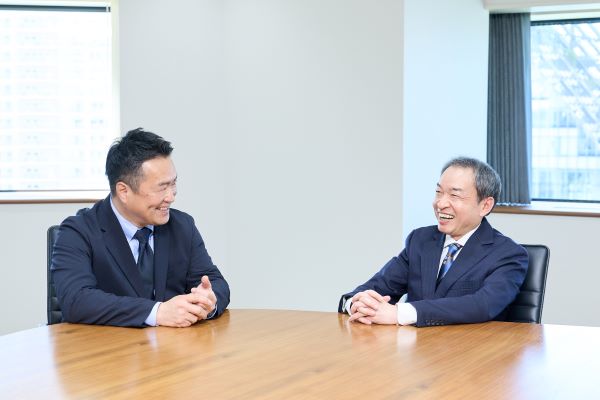
“Japan is at the forefront of these challenges,” explains Mr. Kusutani. “We would like to expand the solutions model we have refined in Japan across all of Asia, where we already have a presence as an insurance provider.”
-
*The information presented is based on interviews conducted in March 2026.
-
*1Ministry of Economy, Trade and Industry, “Guidelines for Employers on Supporting the Balance Between Work and Caregiving”
-
*Reference links only available in Japanese