Invisible Forces, Predictable Damage: Using Data to Prevent Logistics Losses
- Social Issues & Advancing Society
- Insurance & Risk Insights
You go through the effort of packing your product carefully before shipping. The box arrives without a scratch or dent. But inside, the product is damaged. For many companies, the most frustrating losses can be the hardest to see.
Logistics loss prevention, a growing field of risk management, involves predicting shocks and vibrations that occur during transport to facilitate preventative measures. We spoke with a series of experts about the trends we are seeing in logistics-related damage, what countermeasures are being made possible through the analysis of transport data, and a real-world application study involving the transport of human cells.
The need for better data
As cargo transportation becomes increasingly diverse, damage incidents during transit are also becoming more complex and difficult to prevent. P&C insurance companies are responding by accumulating data on actual incidents at client companies across a wide range of industries.
- In the past, damage during transport typically involved the following cases:
-
Tipping over or falling
-
Cargo shifting because it wasn’t properly secured
-
Snagging, piercing, and falling during forklift cargo handling operations
-
Internal damage caused by vibrations and shocks
-
Water damage caused by rainwater or condensation
But with the changing environment of cargo transportation, in recent years we have seen substantial changes in how cargo is getting damaged, and a need for multifaceted logistics support. Recent trends include:
(1) Diverse and high-value cargo
With the expansion of e-commerce and increasing sophistication across industries, more cargo requires careful handling. For exports like high-value domestic luxury food products, pharmaceuticals, and precision electronic components, even minor vibrations or impacts that were not previously considered problematic can cause damage. Furthermore, because of increasingly stringent quality control standards, a growing number of products can no longer be sold once they have been subjected to impact, even if there is no visible external damage. And with the higher value-added of cargo, the amount of loss per incident is also on the rise.
(2) Complex transportation
With the expansion of modal mix transportation, the increase in international shipping, and the shift toward cross docking—in which goods are sorted and shipped without being stored as inventory—more and more transportation processes now involve transshipment and storage. As the number of steps in the process increases, it becomes harder to track who is handling the cargo, at what stage, and under what conditions, thereby increasing the risk of accidents.
(3) Geopolitical risks
Conflicts and sudden geopolitical changes can make previously used transportation routes unavailable. Routes that make significant detours to avoid conflict zones, as well as shifts from maritime transportation to land or rail transportation for portions of the journey, can substantially change transportation conditions and may require a reassessment of cargo configurations and packaging formats.
(4) Intensifying climate
As climate change progresses, rainfall, wind, and temperature fluctuations are becoming increasingly volatile. The increasing severity of weather-related disasters is contributing to the trend toward larger scale damage.
(5) Human resource shortages
The number of people engaged in logistics is declining. Not only do the same tasks have to be carried out with fewer staff, but key institutional knowledge—including technical skills and operational know how—may not be adequately passed on. Operational risks arising from these labor shortages cannot be overlooked as a contributing factor to accidents.
Understanding the challenges
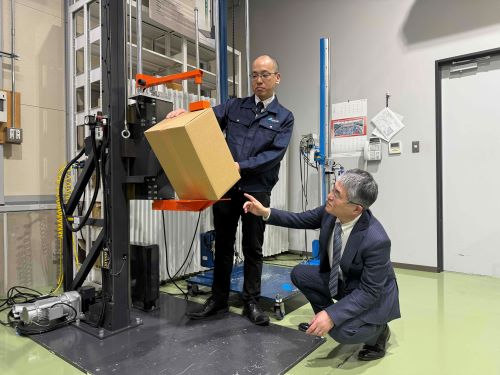
“Damage during transportation is caused by external impacts and environmental changes,” explains Hisaki Ematsu of Tokio Marine & Nichido Adjusting Services Co., Ltd., who has been involved in risk consulting services for many years. “The first preventative measure we recommend is to ensure that shipments are securely packed so that shocks and environmental changes do not affect the cargo inside.”
“Because it is impossible to know what may happen during transportation, many companies believe packaging must always be made as robust as possible. There are, however, disadvantages to excessive packaging. Packaging materials are a cost incurred to facilitate transportation and do not generate profit. Moreover, since packaging is often discarded after unpacking, excessive packaging is not sustainable.
“To prevent excessive packaging, we need to reduce uncertainty in the transportation process. If we understand the risks in advance, it becomes easier to downsize to a type of packaging that is sufficient for the circumstances. The benefits extend to logistics providers, who can more readily optimize transport routes and select appropriate vehicles. Therefore, it is important to understand what environmental changes (routes, modes of transportation, schedules, etc.) occur during actual transportation by collecting data.
“The first thing to consider is the item being transported. Precision equipment and items like glass panels can be damaged from vibrations, so they require shock resistance. Food and chemicals are sensitive to temperature. Other products may require controlled air pressure or lighting.
“Then, we need to understand how transportation can change these conditions. By collecting data using dedicated data loggers and analyzing environmental changes, we can implement accident prevention measures tailored to the required quality standards for transportation.”
Special Counselor
Loss Prevention & Technology Strategy Team (LTS),
Solutions Division
Tokio Marine & Nichido Adjusting Services Co., Ltd.
Certified Human Centered Design Professional
(Human Centered Design Organization)
Certified Associate Professional Ergonomist
(Japan Human Factors and Ergonomics Society
Certification No. JO109)
Cross-industry collaboration
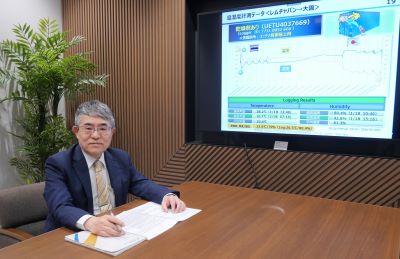
Since accurate measurement is key to assessing transportation conditions, Tokio Marine collaborates with Shinyei Technology, a measuring equipment manufacturer, to collect transportation data and improve logistics accident prevention services.
For nearly 80 years, Shinyei Technology has specialized in the development of a wide range of instruments for measuring transportation conditions, as well as shock and drop testers designed to support product design and improve transportation reliability. The company has advanced expertise in collecting and analyzing data.
Improved technology
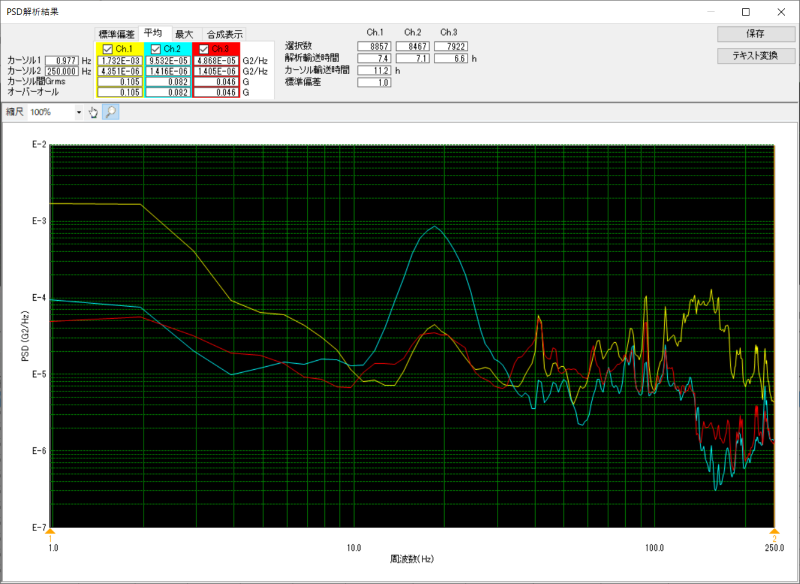
In addition, they can now record the waveform of vibrations. Accident prevention tends to focus on drops, collisions, or major shocks, but products can also be damaged by repeated exposure to vibrations. Waveform analysis can reveal the frequency of how much a product oscillates within a given period of time. Software can then process the data and analyze oscillation frequency to paint a detailed picture of sway characteristics.
Some modern sensors go even further, pairing accelerometers with temperature and humidity sensors. These multi-parameter devices are already being put to practical use and have demonstrated the value of efficiently collecting a variety of data.
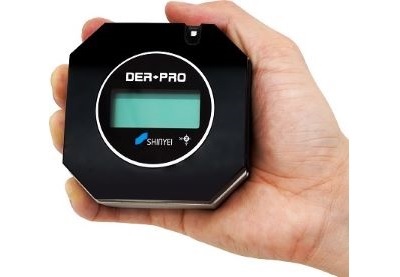
a transportation environment recorder developed
by Shinyei Technology,
also used by Tokio Marine
for transportation data measurement
Waveform: The overall pattern in which the vibration moves
Frequency: The number of oscillations occurring within a given period of time
Data as a starting point
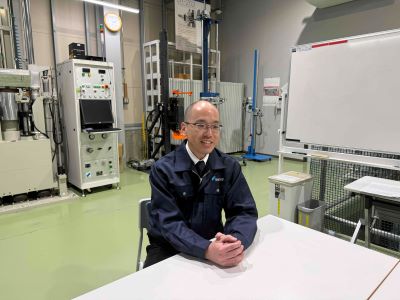
The data collected using data recorders offers a trove of valuable insights for preventing accidents and improving transport quality. “The proper use of the collected data allows us to explore a variety of potential countermeasures,” explains Dr. Kazuaki Kawaguchi of Shinyei Technology, an expert in transportation data measurement and analysis,
“As transportation becomes more sophisticated and products become higher value-added, the number of cargo shipments requiring strict quality standards is increasing. For certain products like pharmaceuticals, management standards have been established to verify transportation quality.
“But the benefits of data collection are not limited to meeting those standards. Some logistics companies measure how well cargo is handled by front line workers and use the data to improve the quality of their services. Transportation data can also help bring customers peace of mind by objectively demonstrating the safe handling of their items. Manufacturers of home appliances, precision equipment, automobiles, electronics and so on collect data to optimize packaging and solve common shipping issues.
“The food and fresh produce industry serves as a good example. A big concern for companies exporting Japanese strawberries has been the damage caused by vibrations during transport, which would make the berries come in contact with the plastic film, containers, or one another. An analysis of vibrations during transport allowed these companies to develop packaging that better minimizes fruit movement, thereby reducing damage. We can expect to see such transportation data being used more and more in the future.”
Ph.D (Engineering), General Manager
Business Development Division,
Business Planning & Development Headquarters,
Shinyei Technology Co., Ltd.
Research Fellow,
International Maritime Research Centre,
Graduate School of Maritime Sciences,
Kobe University
Extreme monitoring for living cells
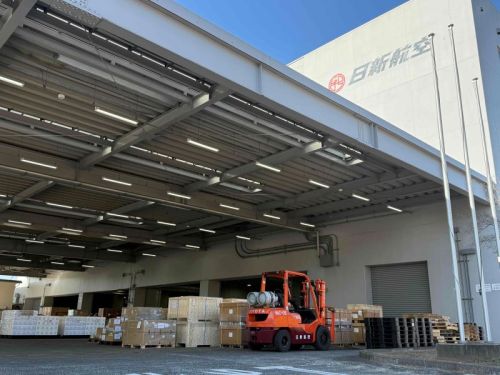
At the forefront of transportation data collection and analysis are companies requiring exceptional transport conditions. Nisshin Corporation, for example, uses vacuum-insulated cold storage boxed to transport pharmaceuticals.
Bio-Medical Sales Department,
Nissin Corporation
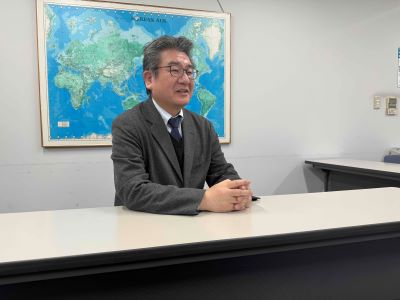
Analysis of data from the test run reported no abnormalities. Transported cells suffered no damage, demonstrating that safe transportation was possible under certain specific conditions. Since results may differ substantially depending on the type of cells being transported and detailed transport conditions, further tests are planned.
“We wanted to determine the value we could draw from conventional transport methods. The shinkansen doesn’t experience major shocks, but we wanted to know how the slight continuous shaking—mostly unnoticeable for passengers—would affect the items being transported.”
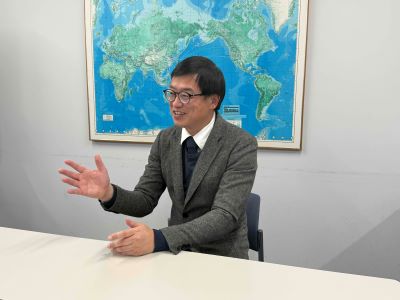
“In Japan, population decline is expected to continue. We are at risk of seeing greater regional disparities in the provision of advanced medical care. By combining the Shinkansen’s outstanding speed and punctuality with advanced data-backed transportation techniques, we can help provide advanced medical services in more regional areas on par with what is available in major cities.”
Bio-Medical Sales Department,
Nissin Corporation
Solutions grounded in science
Ematsu, who has spent many years providing loss prevention consulting services to customers of TMNF, is adamant about his future mission. “I want to make sure people understand the value of correctly measuring transportation data and understanding its patterns so that it can be used in accident prevention for as many people as possible,” he says. “I also hope to leverage scientific expertise and the latest technologies to reduce loss and waste throughout society, even if only a little, to help create a positive loss prevention cycle.”