Promoting Self-Medication Can Save Billions for Japan’s Healthcare System
- Insurance & Risk Insights
- Social Issues & Advancing Society
Due to the relentless rise in healthcare costs, the finances of health insurance associations in Japan are becoming increasingly dire. With an aging population, more advanced medical technology, and growing access to medical services, approximately 80% of health insurance associations were in the red in fiscal year 2025. Some health insurance associations were even forced to dissolve, highlighting the urgency of finding a durable financial solution.
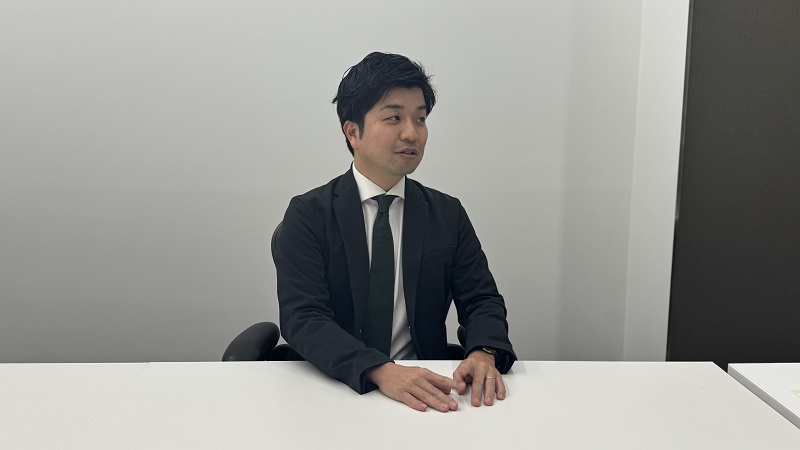
One potential path that has been gaining attention for its ability to keep people healthy at a lower cost is self-medication. Since its founding in 2020, Whitehealthcare Inc. has sought to support such self-medication practices. In this article, we spoke with Fumiyuki Ogoshi, a licensed pharmacist and member of the Business Development Group in the company’s Corporate Planning Department, and Yusaku Miyamoto of the Business Division’s Health Insurance CS Group, about Whitehealthcare’s initiatives.
Self-medication is becoming a necessity
Whitehealthcare was established in July 2020 through joint investment by Mitsubishi Corporation and Tokio Marine Holdings. In light of social trends such as rising medical costs and increasingly complex health challenges, the company is developing healthcare support services that primarily target health insurance associations and local governments. In their approach, they utilize health insurance claims data (data from statements of medical expenses issued by medical institutions providing insured care) and data from medical examinations.
When asked what kinds of challenges are emerging on the frontlines of healthcare, Mr. Miyamoto said:
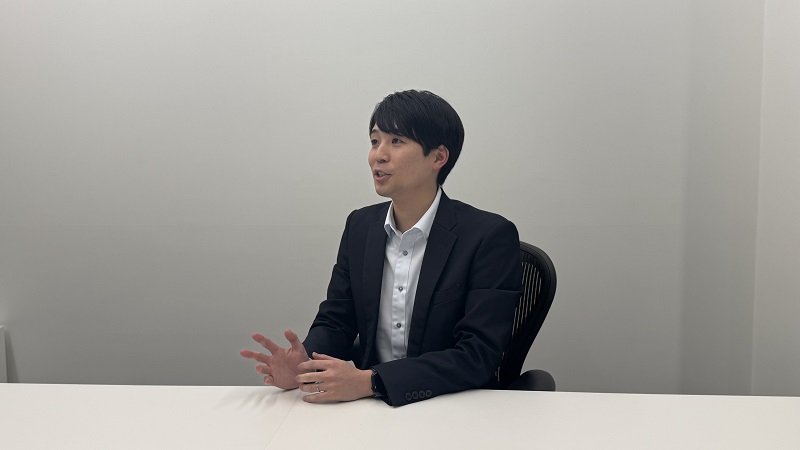
“To take care of your health, first maintain a regular daily routine. Get to know your body by being aware of your dietary habits, sleep patterns, bowel movements, and baseline body temperature. Don’t overlook signs of illness, but try to recover on your own while symptoms are still mild. It remains important to promptly seek professional medical attention when necessary.”
One tangible example of self-medication is the use of OTC drugs, though they are often misunderstood.
“Many people mistakenly believe that OTC drugs available at pharmacies or online are less effective than prescription drugs,” Mr. Ogoshi explained. “But that is not necessarily the case. Many drugs that switched from being prescription to OTC (known as switch OTC drugs) still contain the same active ingredients.”
As of September 2025, 117 active ingredients and 2,972 products classified as switch OTC drugs had been approved. The range of options for consumers continues to steadily expand.

Another common misconception is that OTC drugs are more expensive than prescriptions. According to Mr. Miyamoto, “When you factor in the consultation and dispensing fees associated with a visit to a medical institution, OTC medications can actually be cheaper. They can also save time, since you don’t have to worry about traveling to the hospital or spending time in a waiting room.”
Many people in Japan are probably familiar with drugs like Loxonin S for headaches and Allegra FX for hay fever. Both are examples of switch OTC drugs. When used appropriately for the right symptoms, switch OTC drugs can help people manage everyday ailments on their own.
The potential of self-medication initiatives to help manage healthcare costs is tremendous. According to an expert panel convened by Japan’s Ministry of Health, Labour and Welfare (February 2021), the estimated total savings in health insurance payments resulting from the shift to OTC drugs amount to 321 billion yen, of which 143 billion yen nationwide could be saved thanks to hay fever medications alone.
The four initiatives of Whitehealthcare
Whitehealthcare collaborates with health insurance associations to promote self-medication among their members through four key initiatives.
(1) Public awareness campaign: “Good-to-Know Medicine Tips”
The first is an awareness campaign. Once a month, via the health insurance associations’ digital channels, the company distributes a “Good-to-Know Medicine Tips” newsletter summarizing information on managing medical conditions.
(2) Personalized notifications using health insurance claims data
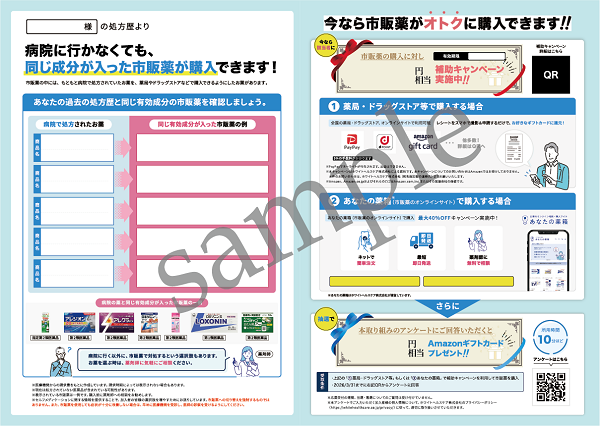
The second is personalized notifications using health insurance claims data. The company analyzes data provided by health insurance associations to identify cases where prescription drugs can be switched to OTC drugs containing the same active ingredients. It then assists the associations in providing this information to concerned members.
“We are currently identifying cases where patients are primarily prescribed medication for conditions such as hay fever, skin disorders, shoulder stiffness and lower back pain, and we send them personalized notifications,” said Mr. Miyamoto. “Since new medications are released every year, we regularly review and update our selection criteria.”
(3) Anata no Kusuribako (Your Medicine Box)
The third initiative is the e-commerce site Anata no Kusuribako (Your Medicine Box). This service is convenient for working people since they can purchase OTC drugs online , 24/7. Furthermore, a key feature of the platform is that in addition to selling medication, it includes a Red Flag function that checks for signs of serious illnesses, and a Medicine Navigator that allows users to search for drugs suitable for their age and symptoms.
“The goal of Your Medicine Box is not simply to encourage users to purchase OTC drugs,” said Mr. Miyamoto, “but rather to raise interest in self-medication by clearly presenting these options in an approachable manner.”
(4) Free consultation service with pharmacists over LINE
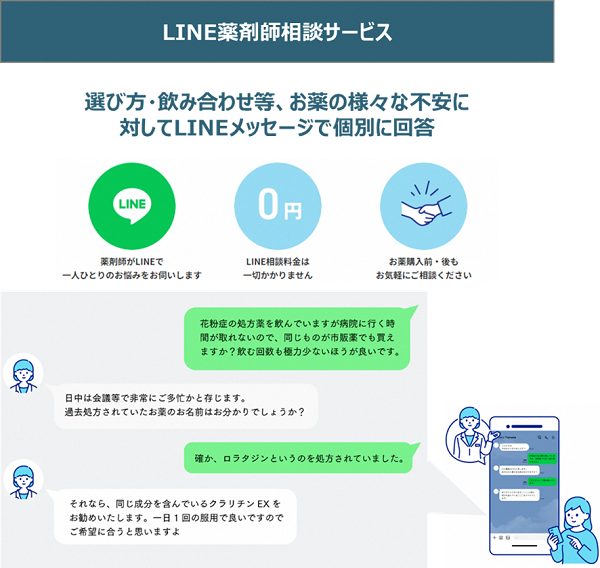
The fourth initiative is the LINE Pharmacist Consultation, which allows members to consult with a pharmacist for free whenever necessary via the LINE messaging platform. Consultations are handled by Mr. Ogoshi and other licensed pharmacists.
“My role goes beyond recommending OTC medications. I make sure to offer solutions to problems and suggest potential next steps, such as: If you see no improvement within a few days, please consult a medical institution,” says Mr. Ogoshi. “I handle an average of 100 consultations per month covering a wide range of topics, such as whether current prescription drugs can be replaced with OTC drugs, what to do if a child develops a fever on a holiday, and how to best explain symptoms to a doctor during a consultation.”
Compared to medical institutions, where patients generally take medication as prescribed by their doctors, LINE consultations are better equipped to tailor medication to individual needs.
For example, for patients who prefer options with fewer side effects such as drowsiness, Mr. Ogoshi can recommend a daily dosage rather than twice a day, or he can suggest a lower-cost alternative.
Users of this service report feeling reassured at being able to seek personalized advice, impressed by the attentive support, and satisfied their symptoms subsided without the need to see a doctor.
“Overall, I feel the users are satisfied,” reports Mr. Ogoshi. Meanwhile, cost savings for health insurance associations can range in the millions of yen, depending on the size of the association.
Sustainable social security for future generations
Mr. Ogoshi stresses two key points to grow Japan’s self-medication program. First, in order to sustain a viable social security system for future generations, individuals need to take ownership over their own health. The appropriate level of engagement with healthcare institutions needs to become the norm—which will require active engagement on the part of the national government, local governments, and health insurance associations.
Second is promoting public programs designed to ease the financial burden on individuals. Under the Self-Medication Tax Deduction system, for example, households are eligible for a tax deduction if their annual purchases of qualifying medications exceed 12,000 yen per family. This system is not yet sufficiently well known.
As Mr. Miyamoto explains, “We need to make sure everyone understands. On a macro level, practicing self-medication contributes to the sustainability and development of the social security system. On a micro level, individuals can benefit from economic incentives such as tax breaks. Actually promoting this message cannot be the responsibility of health insurance associations alone, but will require broad cooperation with doctors, medical institutions, pharmacists, pharmaceutical companies, and individuals. At Whitehealthcare, we intend to leverage the network we have been building since our founding and create bridges connecting all these stakeholders.
“Our vision is to create sustainable healthcare that will endure for generations to come. I want to build a society where people can receive high-quality medical care at a reasonable cost, whether today or in a hundred years. To that end, we will continue to do everything we can to ensure the long-term financial viability of health insurance associations.”